
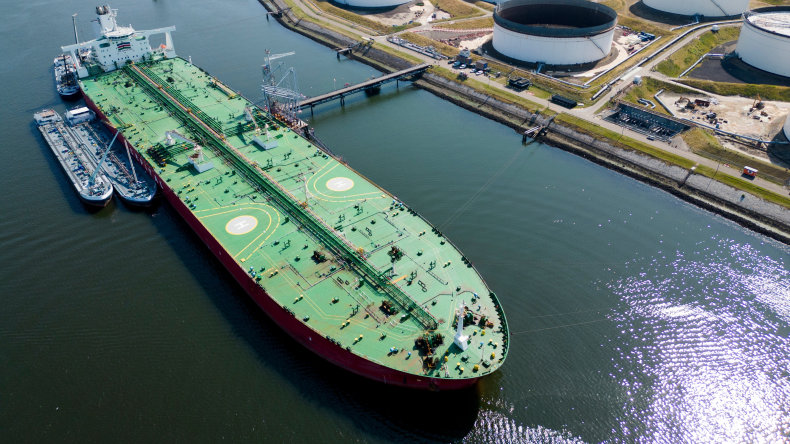
The global movement of crude oil, refined petroleum products, and other bulk liquids depends on port infrastructure capable of safely accommodating the world’s largest vessels. Very Large Crude Carriers represent a class of ship whose size, draft, and cargo volume place demands on port facilities that standard commercial terminals cannot meet. The designation of specific terminals as suitable for VLCC operations — through regulatory approval, engineering certification, and operational verification — is what makes large-volume liquid cargo trade possible at scale.
Draft and Water Depth Requirements
VLCCs loaded to full capacity sit deep in the water — typically between 20 and 22 meters of draft — and require navigable channels and berths alongside depths that exceed what most commercial ports naturally provide. A VLCC permitted dock must satisfy specific minimum depth requirements at the berth face, through the approach channel, and at any turning basin the vessel must navigate to reach the berth. These requirements are verified through hydrographic surveys and must be maintained through ongoing dredging programs as sediment accumulates.
Structural Capacity of Berth Infrastructure
The forces that a VLCC exerts on a berth during mooring, loading, and unloading are significantly larger than those produced by smaller tankers. Breasting dolphins, mooring dolphins, and fender systems must be engineered to absorb berthing impact energy and resist the vessel’s movement under tidal, wind, and current conditions throughout the operation. Loading arms and manifold connections must be sized and positioned for VLCC manifold configurations.
Environmental and Safety Compliance
VLCC operations at permitted docks are subject to regulatory oversight that reflects the scale of the environmental and safety consequences that incidents at these facilities can produce. Oil spill response plans, vapor recovery systems, fire suppression infrastructure, and emergency shutdown systems are all required components of a compliant VLCC terminal. Regular audits by port authorities and flag state inspectors verify that these systems are maintained in operational condition. Terminals that allow safety system degradation lose their operating authorizations in the same way that depth deficiencies remove navigational clearance.
Economic Significance of VLCC Capability
The economic advantage of VLCC shipping over smaller tanker classes is substantial — larger cargo volumes distributed over the fixed costs of a single voyage produce significantly lower per-barrel transportation costs than multiple smaller vessel movements carrying equivalent cargo. For oil-exporting nations and major refining centers, VLCC-capable port infrastructure is a prerequisite for participating in the large-volume trade flows that produce the most favorable shipping economics.
Ongoing Certification and Maintenance Requirements
VLCC dock designation is not a permanent status — it requires ongoing verification that depth, structural condition, safety systems, and operational procedures continue to meet the standards under which the designation was originally granted. Regular inspection cycles, structural assessments, and safety audits are part of maintaining VLCC capability at any terminal. Terminals that treat their designation as a permanent credential rather than an ongoing obligation put both the designation and the operations it enables at risk.
Conclusion
VLCC-permitted dock infrastructure is the physical and regulatory foundation on which large-volume global energy trade depends. Maintaining the depth, structural integrity, safety compliance, and certification status of these terminals is what keeps the most economically efficient segment of global shipping available to the markets that depend on it.